
Dietary Accommodations at Weddings: Doing It Right
August 14, 2021
Dietary accommodation at a wedding is an act of care. Here is how to do it so every guest feels included, not singled out.
A wedding gathers the people the couple loves most, and those people bring a wide range of dietary needs — vegetarian, vegan, gluten-conscious, allergen-free, religious observances. Accommodating these is not a logistical burden; it is an expression of the same care that defines the day. A wedding where every guest has a beautiful, full plate is a wedding where everyone feels included. Here is how to do it right.
Collect Dietary Needs Early
The foundation of good accommodation is knowing what you need to accommodate. Collect dietary needs with the wedding RSVP — a simple line on the response card or a follow-up form. Do not wait to discover them at the reception. Early collection lets the caterer design the menu with accommodations built in, rather than improvising them on the day.
Design Accommodations as First-Class Dishes
The cardinal rule of dietary accommodation is that every option should be a first-class dish, not an afterthought. A vegetarian main should be as considered and beautiful as the centerpiece protein. A gluten-conscious dessert should be as appealing as the wedding cake. When accommodations are designed with the same care as the rest of the menu, no guest feels singled out or lesser.
Vegetarian and Vegan Options
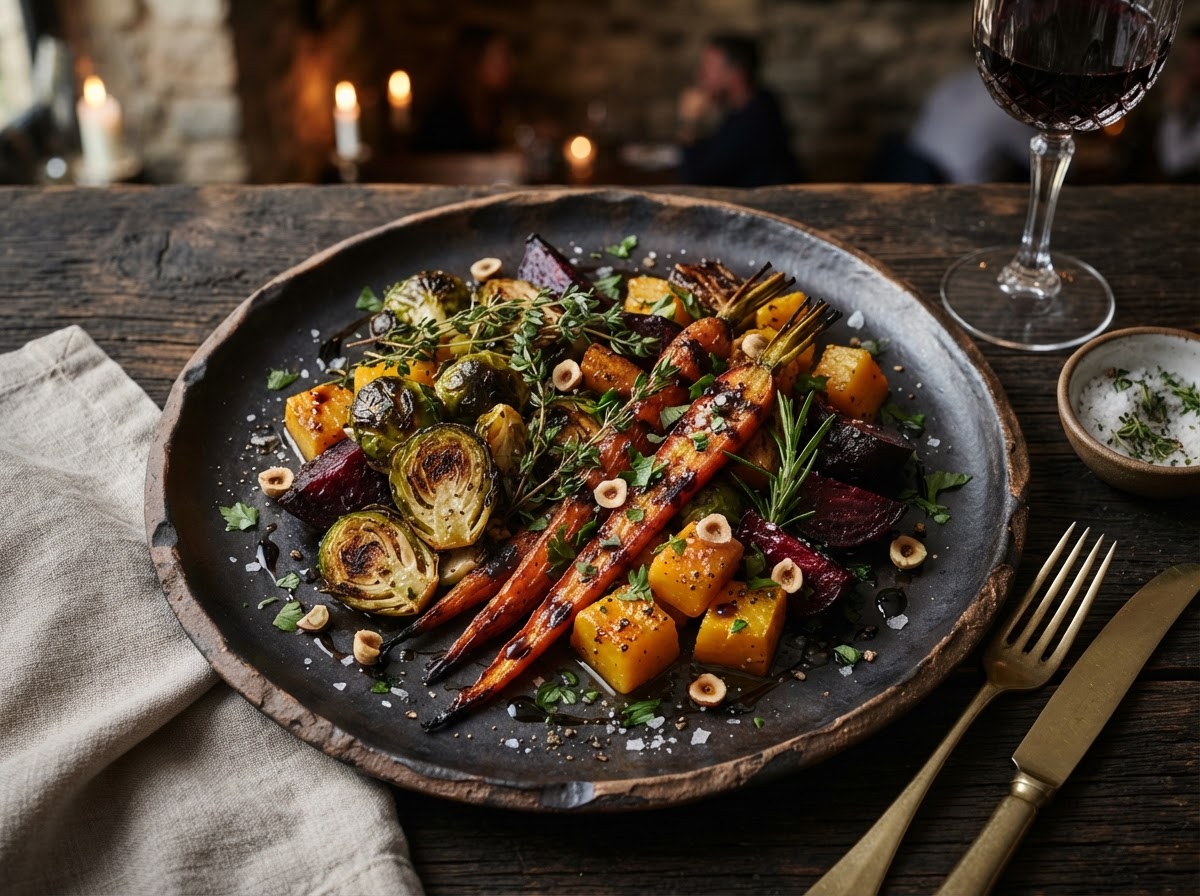
Vegetarian and vegan guests deserve a main that is a genuine centerpiece, not a plate of sides. A stuffed seasonal vegetable, a rich grain and mushroom preparation, or a composed vegetable dish with a flavorful sauce can be as memorable as any protein. The key is intention — designing the vegetarian option as a dish in its own right, not as the absence of meat.
Gluten-Conscious Options
Gluten-conscious accommodation is increasingly common and should be planned from the start, not retrofitted. Many dishes are naturally gluten-free or can be adapted with small changes. A gluten-conscious guest should receive a full, beautiful meal — starter, main, and dessert — not a main with the sides removed. Plan a gluten-conscious path through the entire menu.
Allergen Management
Allergies are a safety matter as well as a hospitality one. Identify the specific allergens among your guests and work with the caterer to ensure those ingredients are either absent from the affected dishes or prepared with strict separation. Cross-contamination is the real risk, and a professional caterer has protocols to manage it. Treat allergies with the seriousness they deserve.
Religious and Cultural Observances
Weddings often gather guests from different cultural and religious backgrounds, each with their own dietary observances — kosher, halal, specific restrictions. Respecting these is part of honoring the diversity of the couple's community. Discuss them with the caterer and design accommodations that let every guest participate fully in the meal. Inclusion here is a deep form of hospitality.
Label Everything Clearly
Clear labeling serves two purposes: it helps guests identify what they can eat, and it normalizes accommodation so no one feels singled out. Label every dish with its dietary attributes — vegetarian, vegan, gluten-conscious, contains nuts. When everything is labeled, the accommodations blend into a menu that simply considers everyone. This small step changes how inclusive the meal feels.
Coordinate Service for Accommodations
For plated service, coordinate with the catering team so that accommodated plates are served seamlessly alongside the standard ones. A guest should not have to flag down a server or explain their needs at the table — the accommodated plate should simply arrive, as considered as any other. Brief the service team in advance so the accommodation is invisible to the guest.
Plan the Dessert Too
Dessert is often where accommodation falls short — the gluten-conscious guest watches others eat cake. Plan a dessert for every dietary need: a gluten-conscious cake or tart, a vegan option, an allergen-free sweet. Every guest should end the meal with something beautiful and satisfying. The dessert is the last impression; make it inclusive.
Make It Invisible, Not Awkward
The highest standard of dietary accommodation is that it is invisible. The guest with a dietary need sits down, is served a beautiful plate, enjoys a full meal, and never feels like a special case. This requires planning, design, and service coordination, but the result is a wedding where every guest feels equally hosted. That is the goal.
Accommodation Is Hospitality
Dietary accommodation at a wedding is not a complication — it is hospitality in its truest form. The couple has gathered the people they love, and caring for each of them, whatever their needs, is the heart of the day. When accommodations are designed with care and served with grace, every guest feels the love that the wedding is meant to express.
If you are planning a wedding and want every guest beautifully accommodated, let's design it together. At Nani Cuisine, we build wedding menus with dietary accommodations as first-class dishes — so no one is singled out and everyone is included. Request a catering quote and we will craft a menu that cares for every guest at your wedding.
Ready to hand the cooking to a private chef?
We design weekly meal prep and private chef experiences around your preferences, dietary needs, and schedule — so your week runs on food you actually look forward to.
Keep Reading
Hiring a Private Chef for Weekly Meal Prep: Is It Worth It?
A private chef for weekly meals sounds like a luxury. For many busy households, it is the most practical decision in the budget. Here is how to tell.
Seasonal Meal Prep: Eating Fresh All Year Round
The best meal prep follows the seasons. Here is how to rotate your batch cooking and meal planning around what is actually fresh, flavorful, and affordable right now.
Balanced Meal Prep: Nourishing Plates for the Whole Week
Nourishing does not have to mean boring. Here is how to build balanced meal-prep plates that are satisfying, colorful, and good for five days running.