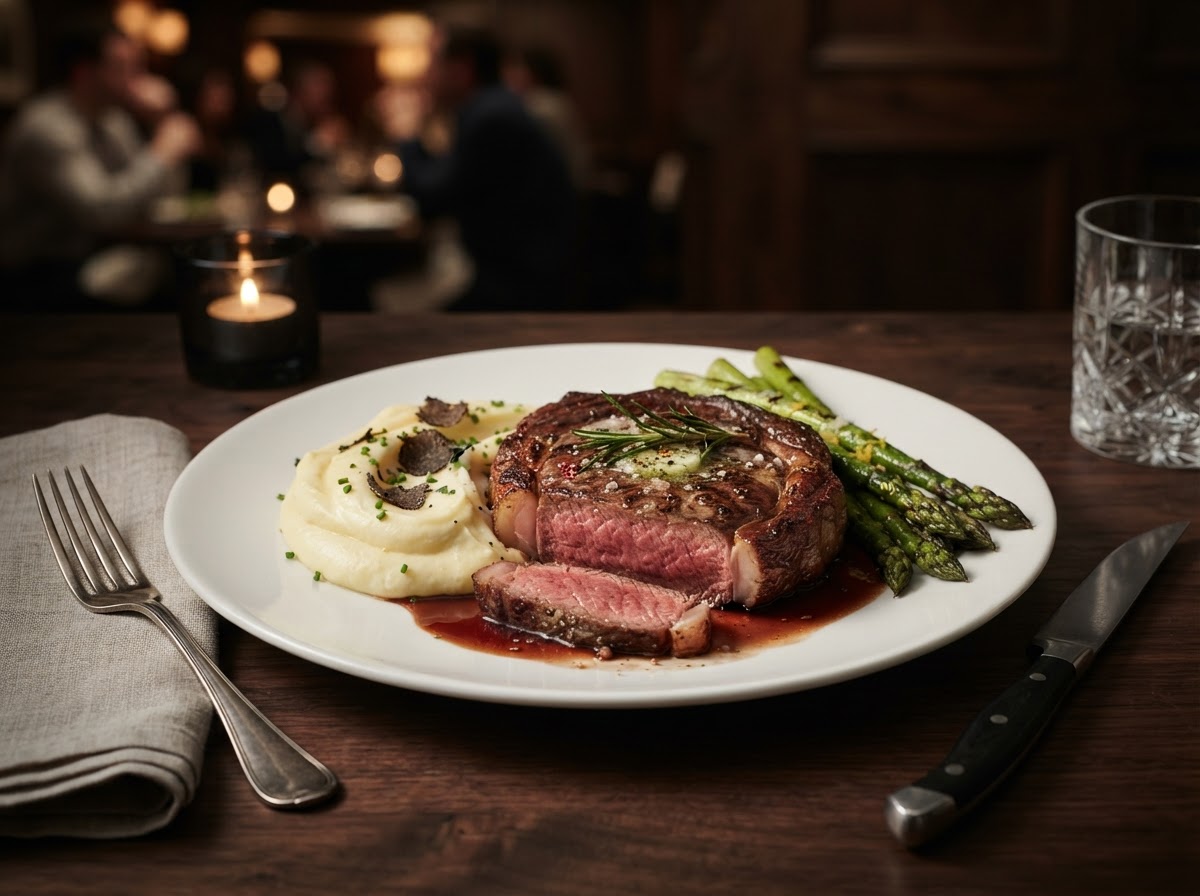
Executive boardroom dining is catering at its most refined: precise timing, discreet service, and food that never interrupts the conversation that matters.
There is a category of business meal that operates by its own rules. It is small — six to twelve people — high-stakes, and often confidential. The food must be excellent, but more than that, it must be invisible: arriving without ceremony, clearing without interruption, never asking the table to pause for its sake. This is executive boardroom dining, and it is catering at its most disciplined.
Discretion Is the First Ingredient
In an executive setting, the service team is part of the room's atmosphere. Loud plating, clattering trays, a server who interrupts a speaker to refill water — any of these breaks the spell. The standard is quiet, attentive, anticipatory service: glasses refilled before they empty, plates cleared in the natural gap between courses, courses arriving when the conversation reaches a pause, not when the kitchen is ready.
This requires a caterer who reads a room, not just a recipe. At Nani Cuisine, I train service staff to move on the edges of conversation, to wait, and to act in the seconds the table gives them. It is a skill closer to hospitality than to food service.
Design the Menu Around the Clock
An executive boardroom meal often has a fixed window — ninety minutes, two hours — and the menu must fit that window exactly. Too many courses and the meal overruns the meeting; too few and it feels thin. I plan backward from the end time: if the meal must conclude by 1:30, the dessert lands at 1:15, the main clears at 12:55, and every step is timed to that anchor.
Portion sizing matters here more than at any other event. Executives do not want to leave a boardroom feeling heavy. Slightly smaller, more refined portions keep the table alert for whatever decision follows the meal.
Choose Food That Converses Well
Boardroom food should be easy to eat while talking — nothing that requires negotiation with a knife, nothing that risks a spill across a pressed shirt, nothing with a strong aroma that fills a closed room. Refined proteins, composed vegetables, and clean plating let the meal support the conversation rather than compete with it.
- Seared or slow-cooked proteins that cut cleanly with a fork.
- Composed vegetable sides rather than loose salads.
- Sauces on the plate, not in pourable jugs that risk spills.
- Desserts that are individual and pre-portioned.
Respect the Confidentiality of the Room
Boardroom meals often involve sensitive discussion — terms of a deal, personnel matters, strategy. The catering team should be briefed on the room's tone in advance and should understand that their presence is functional, not social. Minimal small talk, no lingering, no reading of documents left on the table. Professionalism here is not optional; it is the price of entry.
Beverage Service Sets the Tone
A boardroom meal begins the moment a guest sits down, and what is in front of them sets the tone. Still water, a proper coffee service, and where appropriate, a considered wine selection signal that this is a considered occasion. Beverage service should be continuous but unobtrusive — refills appearing as if by instinct.
Plan for the Room, Not Just the Table
Every boardroom has its constraints: a table that seats ten but a sideboard that fits three platters, a kitchen two floors down, a door that opens directly into a shared hallway. A good caterer surveys the room in advance and plans service flow around its reality. The difference between a smooth boardroom meal and a clumsy one is often logistics, not food.
The Cleanup Is Part of the Meal
When the meeting concludes, the room should return to a neutral state quickly and quietly. Plates cleared, table wiped, linens refreshed if needed, the air refreshed. The executives should be able to transition directly into their next item with no trace of the meal except satisfaction. This handoff is where many caterers reveal their quality — or lack of it.
When to Elevate, When to Restrain
Not every boardroom meal calls for the same register. A quarterly review with the leadership team may want warmth and a touch of celebration. A negotiation with an external party may want restraint and precision. Part of the caterer's job is to read the occasion and calibrate — a touch more elegance here, a touch more restraint there. The menu should match the moment.
A Boardroom Catering Brief
- Guest count and roles, plus any VIP considerations.
- Start and hard-end times, with the agenda's natural breaks.
- Confidentiality level and expected service tone.
- Room layout, kitchen access, and service flow constraints.
- Dietary needs and beverage preferences.
- Whether the meal precedes, interrupts, or follows the business.
The Standard That Defines the Meal
Executive boardroom dining succeeds when no one remarks on the food during the meeting — and everyone remembers it favorably afterward. That paradox, attention without distraction, is the art. It is what separates a delivered lunch from a hosted meal.
If your next boardroom meal carries weight, treat the catering as part of the strategy, not an afterthought. At Nani Cuisine, we plan executive dining around your agenda, your room, and your guests — with the discretion the occasion demands. Request a private chef or catering quote and we will design the meal to match the moment.
Ready to hand the cooking to a private chef?
We design weekly meal prep and private chef experiences around your preferences, dietary needs, and schedule — so your week runs on food you actually look forward to.
Keep Reading
Hiring a Private Chef for Weekly Meal Prep: Is It Worth It?
A private chef for weekly meals sounds like a luxury. For many busy households, it is the most practical decision in the budget. Here is how to tell.
Seasonal Meal Prep: Eating Fresh All Year Round
The best meal prep follows the seasons. Here is how to rotate your batch cooking and meal planning around what is actually fresh, flavorful, and affordable right now.
Balanced Meal Prep: Nourishing Plates for the Whole Week
Nourishing does not have to mean boring. Here is how to build balanced meal-prep plates that are satisfying, colorful, and good for five days running.